In an era where seamless communication is vital to operational success, customized telephony solutions emerge as the strategic edge for businesses seeking efficiency and growth. Grandstream’s innovative approach combines versatile, easy-to-deploy devices with centralized management systems like GDMS, enabling organizations to tailor workflows, enhance security, and scale effortlessly across multiple locations. Their range of IP phones, especially the GRP series, exemplifies this philosophy, offering features that transform basic endpoints into powerful communication hubs. But as technology evolves rapidly, can these customizable systems keep pace with emerging demands and threats? This compelling blend of flexibility, security, and scalability invites organizations to rethink their communication infrastructure—not just as a utility, but as a catalyst for innovation and competitive advantage. Are you ready to unlock the full potential of your network through intelligent, adaptable telephony solutions?
Transforming Business Communications with Customizable Telephony Solutions
In today’s fast-moving business landscape, clear and reliable communication isn’t just a convenience—it’s a vital ingredient for success. Companies are under constant pressure to connect employees, partners, and customers smoothly and efficiently. As organizations grow, their communication needs become more complex, making traditional phone systems increasingly inadequate. This is where customized telephony solutions step in, offering tailored features that align perfectly with specific business workflows and goals.
Customizable telephony transforms routine communication tools into strategic assets. Instead of relying on generic systems, businesses can craft workflows that enhance productivity and improve customer experiences. Features like intelligent call routing, auto-attendants, and personalized dashboards can be configured to match organizational structures and branding, ensuring each interaction feels seamless and professional. For instance, directing calls directly to the appropriate department reduces wait times and frustration, making every customer interaction more efficient.
Beyond immediate operational benefits, these tailored systems also provide long-term scalability. As your business expands—adding new locations, teams, or services—a custom telephony setup adapts effortlessly. Unlike off-the-shelf solutions that often require costly upgrades or replacements, a flexible system can grow alongside you. You can add features, incorporate new integrations, and modify workflows without disrupting existing operations, ensuring your communication infrastructure remains reliable and future-proof.
Internal workflows see a significant boost with personalized telephony. When features like call forwarding, voicemail-to-email, or presence indicators are aligned with your team’s needs, employees spend less time navigating menus or waiting for calls to be routed correctly. Instead, they can focus more on their core tasks, increasing overall productivity. Customers benefit from this efficiency too, experiencing faster, more personalized service that builds trust and loyalty.
Managing these sophisticated systems is easier than ever, thanks to cloud-based platforms. Centralized control dashboards allow IT teams to configure, monitor, and troubleshoot devices remotely, regardless of location. This not only simplifies deployment but also reduces operational costs and minimizes downtime. Regular updates and security patches can be pushed out seamlessly, ensuring your system remains secure and up-to-date without the need for on-site visits or manual interventions.
Investing in customized telephony isn’t just about technology—it’s about strategic advantage. It allows businesses to deliver a more cohesive, responsive communication environment that aligns with their unique needs. This tailored approach enhances internal collaboration and elevates customer interactions, ultimately driving growth and competitiveness. By adopting systems that are built around your organization’s specific workflows, you create a foundation that supports innovation and agility in an ever-changing market.
The shift toward personalized communication solutions also prepares your organization for rapid change. Whether it’s adding new users, integrating with emerging technologies, or expanding into new markets, a custom telephony system provides the flexibility needed to adapt quickly. It ensures that your communication channels are not just a cost but a catalyst for growth, helping your business stay ahead of the curve.
In essence, customizable telephony systems turn what was once a basic utility into a strategic business tool. They enable you to craft communication experiences that are smooth, efficient, and aligned with your organizational goals. As technology advances and customer expectations evolve, having a system that can be precisely tailored to your needs is no longer a luxury—it’s a necessity. Embracing this flexibility ensures your business remains agile, connected, and ready to meet the demands of tomorrow.

Core Concepts of Telephony Technology and Device Management
Telephony technology has advanced significantly from the days of simple landlines, now supporting a broad spectrum of features that enhance both internal collaboration and customer engagement. At the core of these innovations is Voice over Internet Protocol (VoIP), which transforms voice signals into data packets that travel over the internet. This shift not only reduces costs but also unlocks high-definition audio, video conferencing, presence indicators, and seamless integration with other business applications. These capabilities make modern telephony an essential part of any organization’s digital infrastructure, enabling more dynamic and responsive communication.
Effective device management is vital for deploying and maintaining these sophisticated systems smoothly. It involves remotely configuring, monitoring, and updating endpoints across an organization’s network, streamlining operations and reducing the need for manual, on-site intervention. Centralized management tools empower IT teams to push firmware updates, troubleshoot issues, and make configuration adjustments from a single dashboard. This approach minimizes errors, ensures consistency across devices, and enhances overall security by maintaining current software standards. As a result, organizations can support a growing number of endpoints without sacrificing reliability or security.
The evolution of telephony devices mirrors broader trends toward digital, customizable solutions that grow with the business. Early analog phones provided basic voice communication, but today’s IP phones support high-definition sound, video calls, and programmable keys tailored to specific workflows. Devices like Grandstream’s IP phones are designed for large-scale deployment, featuring zero-touch provisioning that enables rapid setup and deployment. Organizations can pre-configure these devices in the cloud or locally, then ship them directly to various locations, reducing setup time and ensuring uniformity across the network.
Interoperability with existing IT ecosystems is another key aspect of modern telephony devices. These endpoints support standard protocols that facilitate seamless integration with Customer Relationship Management (CRM) systems, unified communications platforms, and other digital tools. This interoperability allows users to access multiple communication channels through a single interface, boosting productivity and simplifying workflows. Additionally, integrated security features such as encryption and secure boot processes help protect conversations and sensitive data from cyber threats, reinforcing the resilience of the entire communication infrastructure.
Scaling a telephony system requires strategic planning and the right hardware choices. Cloud-based solutions offer flexibility, enabling organizations to add or remove devices without significant hardware investments or system disruptions. Centralized management platforms like Grandstream’s GDMS provide a single interface to configure, monitor, and maintain thousands of devices across multiple locations. This level of control supports expansion efforts, whether geographically or technologically, ensuring that the communication network remains agile and adaptable to future needs.
Maintaining a reliable telephony network involves ongoing management practices. Regular firmware updates are essential—they patch vulnerabilities, introduce new features, and ensure compatibility with evolving network standards. Consistent configuration management reduces the risk of errors and security gaps, while proactive performance monitoring helps detect issues early. By keeping detailed records of configurations and updates, IT teams can troubleshoot more efficiently and plan for future scaling. Security remains a priority, with devices supporting encryption protocols and secure boot processes that protect against unauthorized access and tampering, ensuring communications stay private and secure.
In today’s fast-evolving communication landscape, understanding the core concepts of telephony technology and device management is crucial. These foundations enable organizations to deploy reliable, scalable, and secure systems that support their growth and innovation. When managed effectively, telephony devices become more than mere communication tools—they transform into strategic assets that improve operational efficiency, enhance customer experiences, and position businesses for long-term success. Mastering these fundamentals ensures your network remains resilient, flexible, and ready to meet the demands of tomorrow’s digital world.

Grandstream’s Cutting-Edge Devices and Management Systems Power Seamless Telephony
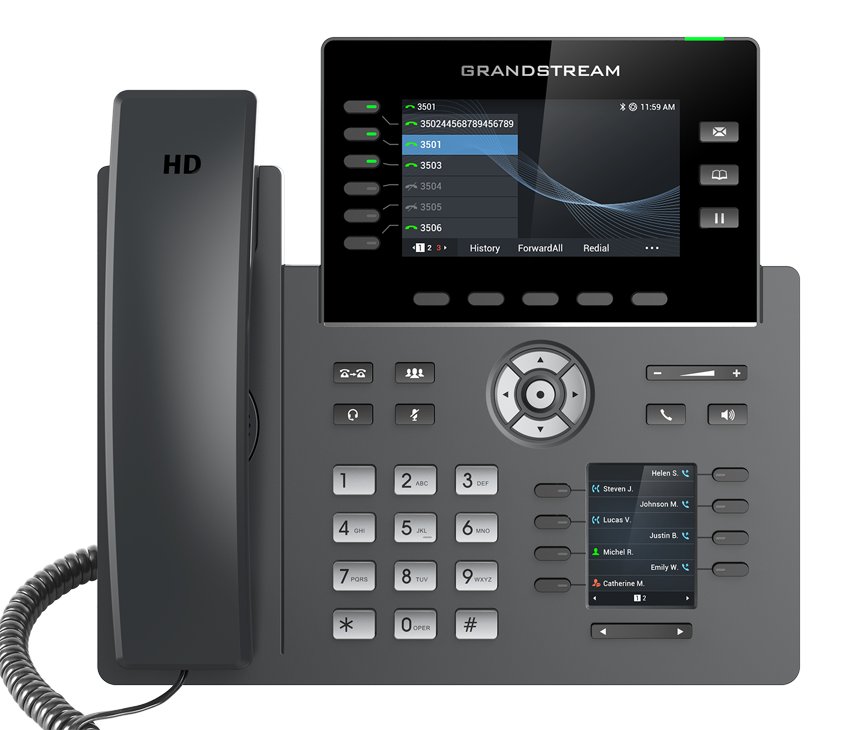
Grandstream’s approach to telephony innovation centers on creating an ecosystem that seamlessly combines versatile hardware with intuitive management tools, designed to meet the dynamic needs of modern organizations. Their range of IP phones, especially the GRP series, exemplifies this strategy by offering devices that are both easy to deploy at scale and highly customizable. These phones support advanced features like high-definition audio, Bluetooth connectivity, programmable keys, and vibrant color displays, making them adaptable extensions of any business’s communication system. This flexibility ensures that organizations can tailor their setups to match specific workflows, branding, and user preferences, transforming basic devices into powerful communication tools.
A key element of Grandstream’s strategy is the centralized control provided by GDMS, their cloud-based device management system. This platform offers a single, user-friendly interface to configure, monitor, and maintain thousands of devices across multiple locations. With GDMS, IT teams can perform remote provisioning—significantly reducing deployment time and eliminating the need for on-site visits. They can push updates, modify settings, and troubleshoot issues from anywhere, ensuring consistency and security while lowering operational costs. This level of control makes managing a large-scale deployment straightforward and efficient, even for organizations with dispersed teams.
The hardware lineup from Grandstream is designed with mass deployment in mind. Devices like the GRP series support zero-touch provisioning, allowing organizations to pre-configure endpoints in the cloud or locally before shipping them out. Once connected to the network, these phones automatically download their configurations and become operational, often without any manual intervention. This process minimizes setup errors, shortens rollout timelines, and guarantees uniformity across all endpoints. Such features are crucial for maintaining a reliable, cohesive communication environment, especially when scaling rapidly or expanding geographically.
Customization remains at the core of Grandstream’s offerings. These devices can be extensively tailored—from call routing and auto-attendants to security protocols and user profiles—enabling businesses to craft workflows that fit their unique operational needs. For example, customer service teams can configure speed dials and presence indicators to speed up interactions, while sales teams can prioritize call quality and ease of use. When integrated with GDMS, updating these settings across thousands of devices becomes effortless, ensuring that the entire system evolves in tandem with changing business demands.
Interoperability plays a vital role in Grandstream’s ecosystem. Their devices support standard protocols that enable seamless integration with CRM systems, unified communications platforms, and other digital tools. This interoperability allows users to access multiple communication channels from a single interface, boosting productivity and simplifying workflows. Security features like encryption and secure boot further protect conversations and organizational data from cyber threats. By embedding these security measures into their devices, Grandstream ensures that organizations maintain a resilient and trustworthy communication infrastructure.
Scalability is built into Grandstream’s design philosophy. Their hardware and management solutions are crafted to grow with your organization. Cloud-based deployment models make adding or removing devices straightforward, without heavy hardware investments. The centralized management platform, GDMS, provides a comprehensive control point for all endpoints, simplifying expansion efforts and integrating new technologies seamlessly. This foresight supports long-term growth, whether expanding geographically or adopting emerging communication tools, ensuring your network remains agile and future-ready.
